SAMPLE REVIEW / APPROVAL CONSOLE
Sample Approval Checklist for China Sourcing
A sample can look promising and still leave a product, packaging, accessory, function, or version question open. A useful approval record names the exact item reviewed, comparison reference, observed difference, buyer status, and next evidence before production moves.
Direct answer: identify the sample version, compare it with the current product record, log visible differences, state the buyer status, and keep unresolved points connected to the next sample, record, or check.
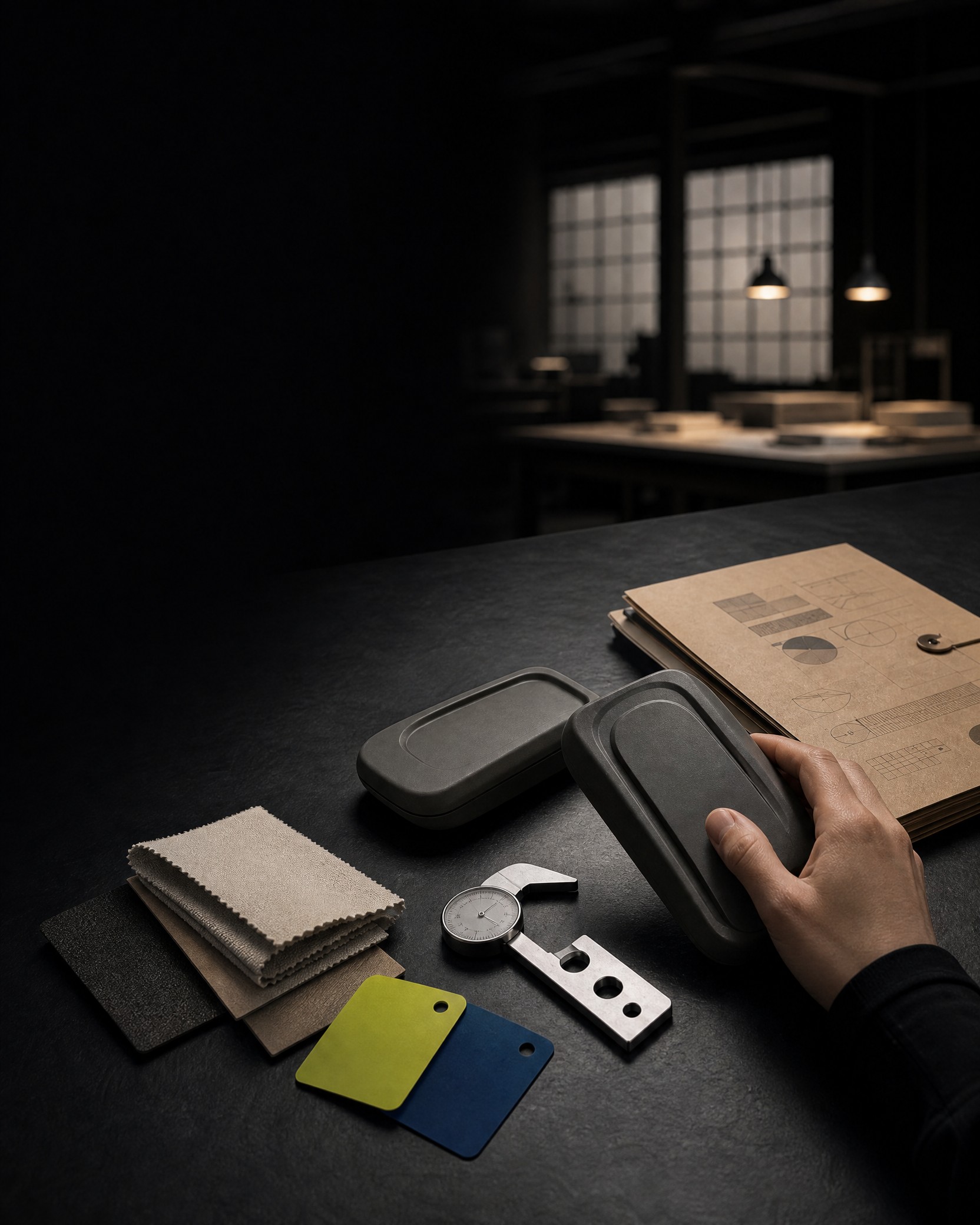
APPROVE A VERSION / NOT A GENERAL IMPRESSION
The question is not only “does this look good?” It is “what exactly is this sample allowed to represent?”
Start with the sample request, current specification, and sample feedback record. Keep temporary packaging, missing accessories, open artwork, untested features, or later changes visibly outside an approval statement.
FOUR REVIEW GATES / MOVE ONLY WHEN THE NEXT POINT IS VISIBLE
01 / IDENTIFY
Which exact sample and document versions are being reviewed?
Record supplier, product, version, date, variation, colour, pack, and comparison files so comments cannot drift to another sample round.
02 / COMPARE
What product, function, material, set, label, or pack-out point is checked?
Compare the reviewed item with the current reference—not memory. Record both observations and the evidence that supports them.
03 / LOG
What difference, correction, owner, and next evidence remain open?
Use a numbered issue, reference photo or detail, requested response, and buyer owner. A promise to fix a point is still an open point until reviewed.
04 / STATUS
What can move, what remains conditional, and what needs another review?
Name a buyer status: continue review, request evidence, revise and resubmit, or use a specific reference—then connect it to the next record.
STATUS RAIL / KEEP A SAMPLE DECISION CONDITIONAL WHEN IT NEEDS TO BE
A short status is stronger when the record behind it is clear.
Use as current reference.
Name the version and record that is being used for the next defined step; keep any separate packaging or later-change point visible.
Proceed only with named conditions.
State the open point, supplier response, evidence needed, buyer owner, and when it must be reviewed again.
Revise and resubmit.
Name the difference and what needs a new sample, photo, drawing, test result, or response before a new buyer decision.
BOUNDARY / A SAMPLE STATUS IS NOT A PRODUCTION OR COMPLIANCE GUARANTEE
Keep the sample reference, written requirement, later quality plan, and buyer decision separate but connected.
What this checklist can organise
The sample identity, current comparison reference, observations, open correction log, buyer status, and the next sample, product, packaging, quality, or change-control record.
What a sample does not prove on its own
One sample does not prove supplier capability, uniform production, product safety, testing, compliance, commercial suitability, legal rights, final pack-out, shipment readiness, or a production outcome.
Where the record travels next
When the buyer uses a sample as a working reference, connect it to the golden sample guide, change-control checklist, product requirement record, and relevant quality plan.
MAKE THE NEXT SAMPLE DECISION MORE SPECIFIC
Have a sample, product reference, or revision question that needs a clearer review record?
Start with the exact sample version, product question, open difference, and the buyer decision that needs better evidence.